Sunday, September 27, 2015

Epic Pharmacy Fail

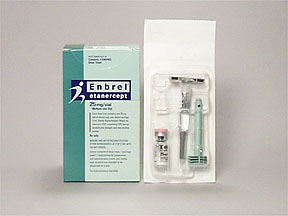
I recently discovered that my local pharmacy had been giving me the pediatric dose of Enbrel for the past 6 months! Yup. You read that right. Since January I have been receiving half the amount of medicine that I was suppose to be taking. I only discovered this mistake because I recently switched insurances and was requesting new prescriptions for my new insurance plan. My rheumatologist called me to clarify that I was actually taking the 25 mg "dosing kit," which is very rarely offered anymore, instead Enbrel typically comes in pre-filled syringes or auto-injectors. She was completely shocked about this dosing error, as her prescriptions had all been correct. Therefore, somehow my pharmacy had been giving me the wrong dose, month after month as I refilled it.

Now don't get me wrong. I actually really like my pharmacy. In fact, I found it very hard to call them and complain about this error, but I needed to make sure it wouldn't happen again. The pharmacist was literally speechless and didn't know what to say to me. I have used my local town pharmacy my entire life and even after moving away, I still traveled back home to continue using this pharmacy. It is a small family business and they know my whole medial history which has helped decrease many stresses and hassles over the past 28 years. I have been willing to pay a little extra money, instead of using mail order, to know that my prescriptions are handled correctly, will be ready on time and there are no surprises. Unfortunately, my trust was recently shattered. 

I know how lucky I am that even on half the intended Enbrel dosage, I still have felt OK. I know it could have been a whole lot worse. I am optimistic that now that I am on the correct adult dosage, I should continue to feel even better. Moving forward, I will most certainly check all of my prescriptions more thoroughly! 


Thursday, September 3, 2015

The Stages of Hiking with JRA

On Wednesday I went on 7 mile hike. It was a very flat and level hike with little elevation. It was also on well kept, wide trails with few roots or rocks to navigate over.  No problem! I thought. Hiking 7 miles in the woods is something I do not decide to do frequently and as a result I am still recovering. However, throughout this hike, I realized I went through many emotional stages...

The Stages of Hiking with JRA

  1. Excitement: I feel great! 3.5 miles each way, no problem. Let's do this! 
  2. Wonderment: Nature is beautiful! Look at these trees, birds, the rushing river!
  3. Motivation: Already one mile down. This is easy! 
  4. Trepidation: My right knee is starting to ache...oh no, not even half way.
  5. Reenergized: Sign says 1.8 miles to go! That's nothing!
  6. Denial: Both knees and ankles are throbbing, but I must keep walking.
  7. Anger: Why is this so hard, it's only 3.5 miles. 
  8. Hope: Only .4 miles to go!
  9. Fear:  As the path narrows and becomes filled with rocks and roots, I have fear with every step that my knees will give out and I will go tumbling into the river. 
  10. Focus: I have to focus on every step I take, all of my effort and energy goes into making each step, no more nature, no more wonderment...
  11. Relief: I made it to the top! Hooray! Must Sit Immediately. 
  12. Anxiety: I know I have to complete this whole journey again to get home. 
  13. Resilience: I have done this once, I can do it again...(and my legs are numb at this point, so it hurts less)
  14. Pain: Once again, every step causes throbbing, stabbing and pain in both knees, ankles and my back.
  15. Despair: Will this trail ever end...
  16. Optimism: I see the bridge at the end of the trail, I can hear cars on the road, we are close!
  17. Thankful: Although my body fought me, it did not fail me and I succeeded.
  18. Fulfilled: I conquered the trail, conquered my JRA and completed my goal! (Now time for a well-deserved ice cream and bath!)


Monday, August 31, 2015

"So I have JRA..."

I recently booked a weekend away in October for my one year wedding anniversary! It's a strange feeling where it seems like just yesterday I was walking down that aisle, but at the same time it feels like we have been married for ages already. This milestone has caused me to reflect on how fortunate I was to find a supportive, caring and understanding partner when I was just seventeen years old.

Prior to meeting my husband, I dated on and off but struggled to find someone who understood the balance of helping me when I needed it, but not pitying me all the time. Some boyfriends went too far in helping me and made me feel like I was incapable of doing anything without assistance, while others seemed to be in denial that I had any limitations at all. Thankfully, my husband seemed "to get it" from the beginning. I still remember the day I told him I had JRA. We were kayaking together with a bunch a friends and were momentarily alone from the rest of the group. I had been wanting to tell him for a while, I wanted him to know before Junior Prom of course! I remember feeling so anxious about this disclosure and how he would react. I nervously said, "So I have JRA.." "Ok" He said. "Do you know what that means?" I responded. "Yeah" he said. And that was about the extent of our conversation! Granted we were only in high school and I am not sure either of us knew what that meant for our future together, but I was relieved that my JRA was a "non-issue" in our relationship. Now of course, having JRA has caused us to face some unique challenges together and our marriage has only just begun, but it has never stopped us from having the life we imagined 10 years ago as teenagers. However, I know that I am fortunate in finding my husband and this is not always the case.

As a result this post is dedicated to all the husbands, wives, friends, sisters, brothers, parents and caregivers who have supported those of us with JRA. Who have pushed us to complete our goals despite our limitations. Who have not accepted having JRA as an excuse for overcoming any challenge or obstacle that may lie in our paths. Who have rubbed our sore knees, massaged our swollen wrists and administered our injectable medications. Who have laughed with us, cried with us and carried us. We thank you...


Monday, July 27, 2015

Juvenile Arthritis Awareness Month: Part 2- Being a college student with JRA

Transitioning to college can be challenging enough. However, having JRA during college adds many more challenges. There are many factors to consider when choosing the right college to attend such as is it a small campus or large campus with shuttles, is there a responsive disability center, are the dorms and buildings accessible and is it close to doctors and health services.

My friends carrying me while
simultaneously tying my shoes!
I attended Boston University for many of these reasons. It was a flat campus, close to all of my doctors and had very accessible buildings. Although, BU had a large campus there were many shuttles and public transportation options to help me maneuver the campus. Despite all of this, college can still be challenging. As a result of the stress of living in a new environment, not-stellar eating habits, late nights studying and much, much more walking, I battled continuous flares, 3 surgeries and constant treatment changes during college. 

However, I made it through with not one, but two degrees (a BS and a MS in occupational therapy) and I learned some tips along the way.
  1. Pick the right college for you: As I mentioned BU was a huge campus, however, it worked for me because it had public transportation as well as school transportation options to help with my mobility. Some people may opt for a smaller campus where you only have one building to walk to. 
  2. Make the connection with the school's disability service right away: BU had a lot of disability services to offer, but there were lots of steps to take to get anything done and it was often frustrating and time consuming. I learned how to advocate for myself better during this period. A smaller school may not have a disability office but you may be able to talk directly with your professors about accommodations. 
  3. PACE yourself: This was one of the most important aspects of managing my JRA at college but also one of the hardest things to do. As a college student, you don't want to miss out on any experience but I often end up paying for busy weekends, with days not wanting to leave my bed.
  4. Adapt and Accommodate: If you are like me and can't pace yourself, learn ways to still enjoy all of your college experiences but with accommodations. For example, my friends would often walk over 2 miles to attend parties (in order to save precious subway money), however I knew if I spent my energy walking, I'd have no energy left to party. I frequently took the subway, cabs or school shuttles to meet them in order to save my energy for the night. I also used a wheelchair (while on spring break in Disney) because I knew there was no way I would be able to keep up and saved my energy to enjoy my vacation.
    In Disney on spring break, a wheelchair
    was necessary to pace myself 
  5. Don't be afraid to say no: By the time I was an upperclassman, I learned that I would rather have friends to my apartment (even if I had to bribe them with wine and food), so I could have a comfortable place to sit all night long but still be with my friends.
  6. Be open and honest to your friends: My friends were wonderful and tried to accommodate and help me as much as possible.  They would even carry me if I was desperate! I was always honest to them when I was really hurting and they learned a lot about JRA as well.
  7. Don't be afraid to ask for help: One of the best ways I relieved stress and decreased my joint pain was to take baths. However, wanting to take a bath in my apartment meant cleaning the tub. After a long day of classes, that was the last thing I had the energy for. Luckily, I had an amazing roommate and friend and on one particularly achy day, I asked her to clean the tub for me and she did! 
  8. Sometimes it sucks: My last point is somewhat hard to read, however, there were definitely nights when I felt left out, was flaring badly in pain, lonely or just felt bummed that I had JRA while in college. It's ok to have nights where you binge watch Sex and The City (eek, I feel old now) and some of your friends may even enjoy the excuse to stay in on a Friday night and join you. However, all experiences (whether they are good or bad) help define who you are as a person and who you become. 
College with JRA can be hard, but it doesn't have to be impossible. I loved my college experience, even though my it was one of the hardest times to manage my JRA. I learned a lot about myself as a person, I learned how to manage my JRA better and I learned how to totally disregard everything and just be a college student. JRA be damned! Whatever your experience ends up being, make sure to make the most of it.
My all time favorite Patriot player, Teddy Bruschi, was doing a
book signing, 1 week after I had knee surgery. The line was over an hour
long, but I brought my crutches to wait to meet him! 

Wednesday, July 8, 2015

Juvenile Arthritis Awareness Month: Part 1- Being a kid with JRA

July is Juvenile Arthritis Awareness Month! Instead of listing facts and statistics about the disease, I've decided to write each week about what it meant for me to grow up with JRA and delve a little more into my experiences with this disease.

Swinging with swollen knees
at five years old
I was diagnosed with JRA at 13 months old and do not know a life that has not been impacted by this disease. My childhood was filled with therapist visits, doctors appointments, pool therapy and frequent medication changes. I wore bi-valved casts on both my legs, every night when sleeping, to prevent my knees from contracting in a flexed position. Twenty-seven years ago they did not have colorful casting plaster and we would decorate my leg splints with stickers. I remember when they finally offered colors and I would always get red and green splints around Christmas time! I also often wore resting wrist splints to prevent contractures in my wrists. As a result I was unable to independently remove my leg splints in the middle of the night and would wobble with splints on, perfecting the mummy walk, to make it to the bathroom. Despite these measures, I would still wake up sore and achy with morning stiffness and I took frequent baths before school, in order to loosen up my joints and make the school day more manageable.

Being a pirate for Halloween to make
use of having to wear an eye patch.
Further complicating my childhood, I had cataract extraction surgery at 5 and 6 years old as a result of persistent Uveitis inflammation, and this resulting in requiring my mother to put in my contact lenses at 5 years old. This made sleep overs and play dates somewhat challenging. However, my mother would always sneak in and help me remove my contact lenses and then come back the next morning to put them back in, being as inconspicuous as possible, so I could still enjoy those slumber party experiences. My parents were always adaptive and creative, making the best out of lousy situations. One of my cataract surgeries occurred around Halloween and I had to wear an eye guard for protection for about a month. In order to still allow me to participate in trick or treating, I was a Pirate that year!

As a result of my many therapy appointments, I did end up missing out on some childhood experiences due to scheduling issues and physical limitations, however I was able to try many unique adaptive activities such as horseback riding, karate and adaptive skiing. Adaptive skiing bNew England Disabled Sports Program and I will most certainly talk about this again in the future. Life as a child with JRA can be challenging. A child's life should be filled with play and fun and not doctors appointments and needles. However, I have met some of the bravest, most courageous children with JRA who are able to always find the joy and laughter in their lives despite the challenges JRA throws at them.
ecame a huge part of my life as my family and I headed up to New Hampshire every weekend to be able to participate in a family activity together. We all became actively involved in the

If you know someone or have a personal story of your life as a child with JRA, email me allgrownupwithjra@gmail.com to be featured on my blog this month.